
Norfloat has over 50 years of experience manufacturing marine buoys and mooring equipment for leisure, commercial, marina and harbour applications.
A correctly designed mooring system is essential for keeping your vessel secure. Choosing the right buoy, chain and connecting components depends on the size of your vessel, water depth, tidal conditions and the location of your mooring.
Norfloat manufactures a comprehensive range of rod, soft and rigid mooring buoys designed for long-term use in demanding marine environments.
Understanding Your Mooring System
A typical mooring system consists of a mooring buoy, chain, shackles, swivels and a seabed anchor or mooring block.
The buoy provides flotation to support the suspended chain, while the chain and seabed anchoring system secure the vessel.
The arrangement will depend on the type of mooring:
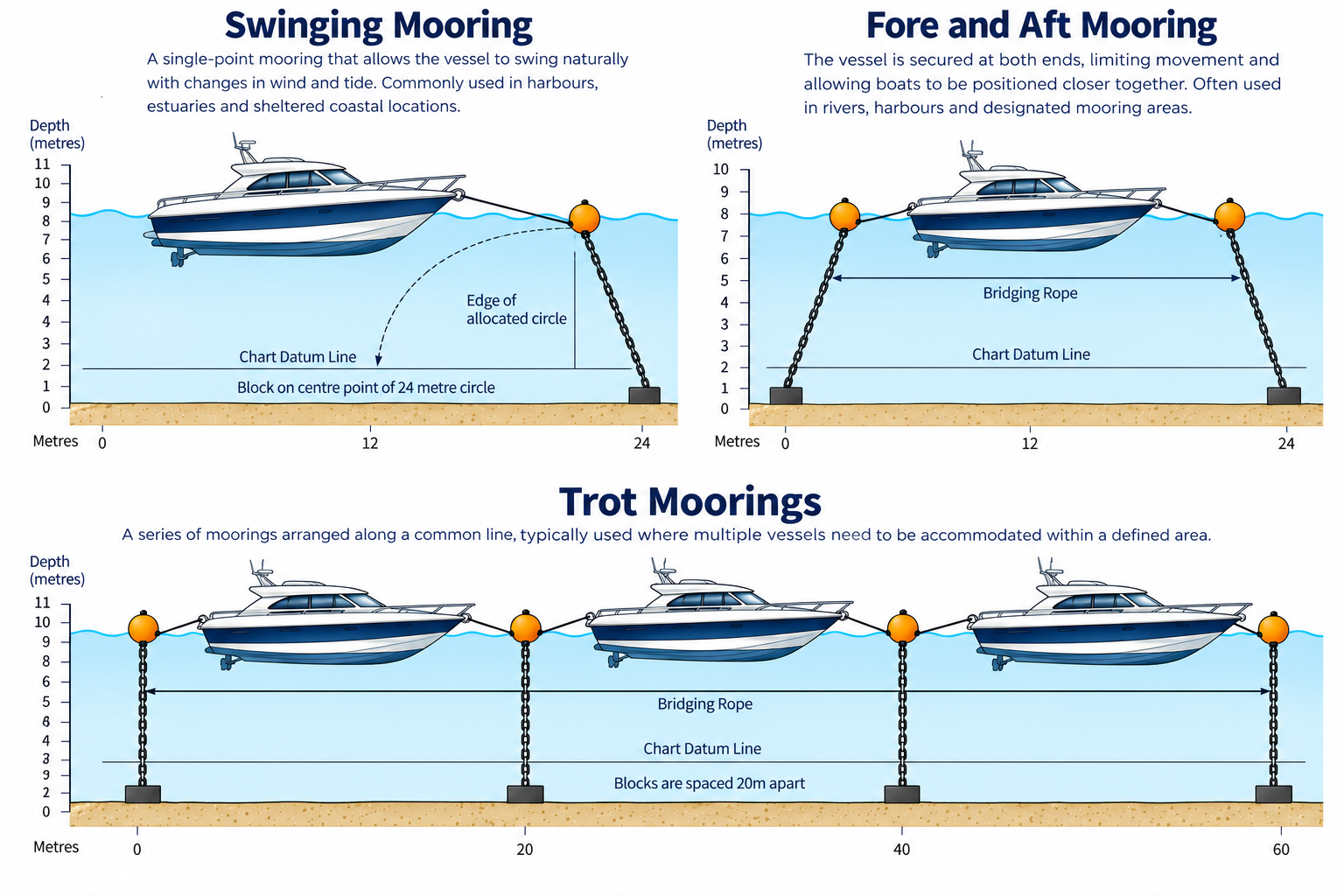
Swinging Moorings
A single-point mooring that allows the vessel to swing naturally with changes in wind and tide. Commonly used in harbours, estuaries and sheltered coastal locations.
Fore and Aft Moorings
The vessel is secured at both ends, limiting movement and allowing boats to be positioned closer together. Often used in rivers, harbours and designated mooring areas.
Trot Moorings
A series of moorings arranged along a common line, typically used where multiple vessels need to be accommodated within a defined area.
Choosing the Right Mooring Buoy
One of the most important considerations when selecting a mooring buoy is its ability to support the weight of the suspended mooring chain.
The required buoyancy depends on:
- Chain diameter – Larger diameter chains are heavier and require greater buoyancy.
- Suspended chain length – The length of chain supported by the buoy affects the total load.
- Buoy capacity – The buoy must provide sufficient support for the submerged chain weight.
- Mooring conditions – Tidal range, exposure and vessel movement can affect the loads on the mooring system.
Find Your Recommended Mooring Buoy
Use our Norfloat Mooring Buoy Calculator to estimate the buoyancy required for your mooring chain.
Simply enter your chain diameter and the length of suspended chain.
The calculator will estimate the chain’s submerged weight, apply an additional planning allowance and recommend suitable Norfloat mooring buoys from our Rod, Soft and Rigid ranges.
Each recommendation includes the buoy’s dimensions, chain-support capacity and a link to the relevant product, with available size and colour options.
Important Mooring Safety Considerations
The calculator provides an initial buoy recommendation based on estimated chain weight. It does not calculate the complete mooring system or assess the forces generated by wind, waves, tides and vessel movement.
All mooring components, including chains, shackles, swivels and seabed anchors, must be appropriately specified for the vessel and local conditions.
For permanent moorings, particularly in exposed locations, we recommend consulting a qualified mooring contractor or your local harbour authority.
Norfloat has over 50 years of experience manufacturing marine buoys and mooring equipment for leisure, commercial, marina and harbour applications.
A correctly designed mooring system is essential for keeping your vessel secure. Choosing the right buoy, chain and connecting components depends on the size of your vessel, water depth, tidal conditions and the location of your mooring.
Norfloat manufactures a comprehensive range of rod, soft and rigid mooring buoys designed for long-term use in demanding marine environments.
Understanding Your Mooring System
A typical mooring system consists of a mooring buoy, chain, shackles, swivels and a seabed anchor or mooring block.
The buoy provides flotation to support the suspended chain, while the chain and seabed anchoring system secure the vessel.
The arrangement will depend on the type of mooring:
Swinging Moorings
A single-point mooring that allows the vessel to swing naturally with changes in wind and tide. Commonly used in harbours, estuaries and sheltered coastal locations.
Fore and Aft Moorings
The vessel is secured at both ends, limiting movement and allowing boats to be positioned closer together. Often used in rivers, harbours and designated mooring areas.
Trot Moorings
A series of moorings arranged along a common line, typically used where multiple vessels need to be accommodated within a defined area.
Choosing the Right Mooring Buoy
One of the most important considerations when selecting a mooring buoy is its ability to support the weight of the suspended mooring chain.
The required buoyancy depends on:
- Chain diameter – Larger diameter chains are heavier and require greater buoyancy.
- Suspended chain length – The length of chain supported by the buoy affects the total load.
- Buoy capacity – The buoy must provide sufficient support for the submerged chain weight.
- Mooring conditions – Tidal range, exposure and vessel movement can affect the loads on the mooring system.
Find Your Recommended Mooring Buoy
Use our Norfloat Mooring Buoy Calculator to estimate the buoyancy required for your mooring chain.
Simply enter your chain diameter and the length of suspended chain.
The calculator will estimate the chain’s submerged weight, apply an additional planning allowance and recommend suitable Norfloat mooring buoys from our Rod, Soft and Rigid ranges.
Each recommendation includes the buoy’s dimensions, chain-support capacity and a link to the relevant product, with available size and colour options.
Important Mooring Safety Considerations
The calculator provides an initial buoy recommendation based on estimated chain weight. It does not calculate the complete mooring system or assess the forces generated by wind, waves, tides and vessel movement.
All mooring components, including chains, shackles, swivels and seabed anchors, must be appropriately specified for the vessel and local conditions.
For permanent moorings, particularly in exposed locations, we recommend consulting a qualified mooring contractor or your local harbour authority.